
After an all-day training session with our graphics and trial technology teams, one topic kept coming up: how to handle last-minute requests under the pressure of trial. It is one thing to talk about the right approach in a conference room. It is another thing when the request comes in late at night and court starts the next morning.
That exact situation played out when I received a text message around 10 p.m. PST from a relatively new colleague who was working on a trial in Delaware. She was concerned that she would not be ready for court the next morning because of a last-minute request from a new associate. The message was simple: could I help?
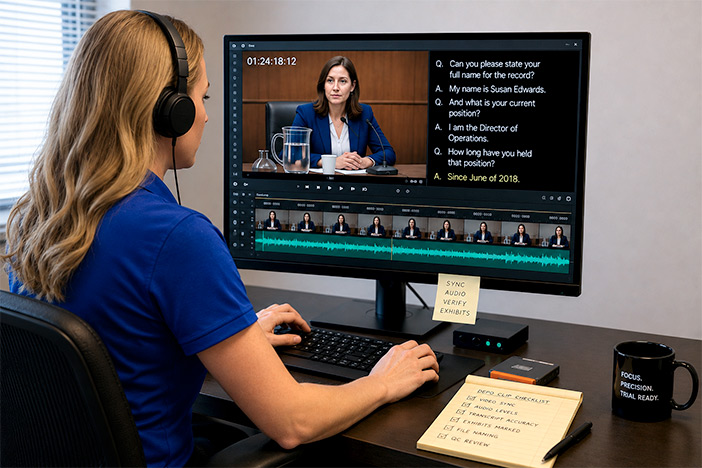
I called her right away. She explained that she had been asked to create a series of deposition impeachment clips for the next witness, along with page-and-line reports in a specific format the associate had shown her. As she began doing the work as instructed, it quickly became clear that the process would take far longer than necessary. She asked whether I could provide remote support? I told her I was happy to help, but first I asked a simple question: why not do it the way we normally do?
She said the associate had asked for it a certain way, and she did not want to challenge the request and appear disrespectful. That is when I reminded her of her job title Trial Consultant. I told her that clients do not bring experienced trial support professionals into court just to operate equipment, they hire them for judgment, efficiency, and the ability to provide results under pressure.
I suggested that she create a couple of impeachment clips using our preferred method and show the associate the result. The approach avoided confrontation and gave them a working example that was a better option. The next afternoon, my colleague called with an update. It turns out the associate had no strong preference about the process once they saw the final product. In fact, they were relieved there was a faster way to get it done. The work was completed quickly, the team was ready for court, and both my colleague and the associate were able to get a couple of hours of sleep before the next trial day began.
When hiring trial support, look for a team that can do more than operate the technology. Look for professionals who bring practical courtroom experience, problem-solving instincts, and the ability to help the legal team make better decisions when time is short, and the pressure is high.